What is the Digital Product Passport (DPP)?
The Digital Product Passport (DPP) is the new digital identity for products, introduced by Regulation (EU) 2024/1781 (ESPR – Ecodesign for Sustainable Products Regulation).
The regulation aims to transform the European market, making it:
- More sustainable
- More transparent
- More circular
- More verifiable
The DPP collects and makes key information accessible about:
- Origin of raw materials
- Product composition
- Production processes
- Environmental impact
- Repairability and recyclability
- End of life
In other words, every product will have a digital identity card accessible via QR code or other unique identifiers.
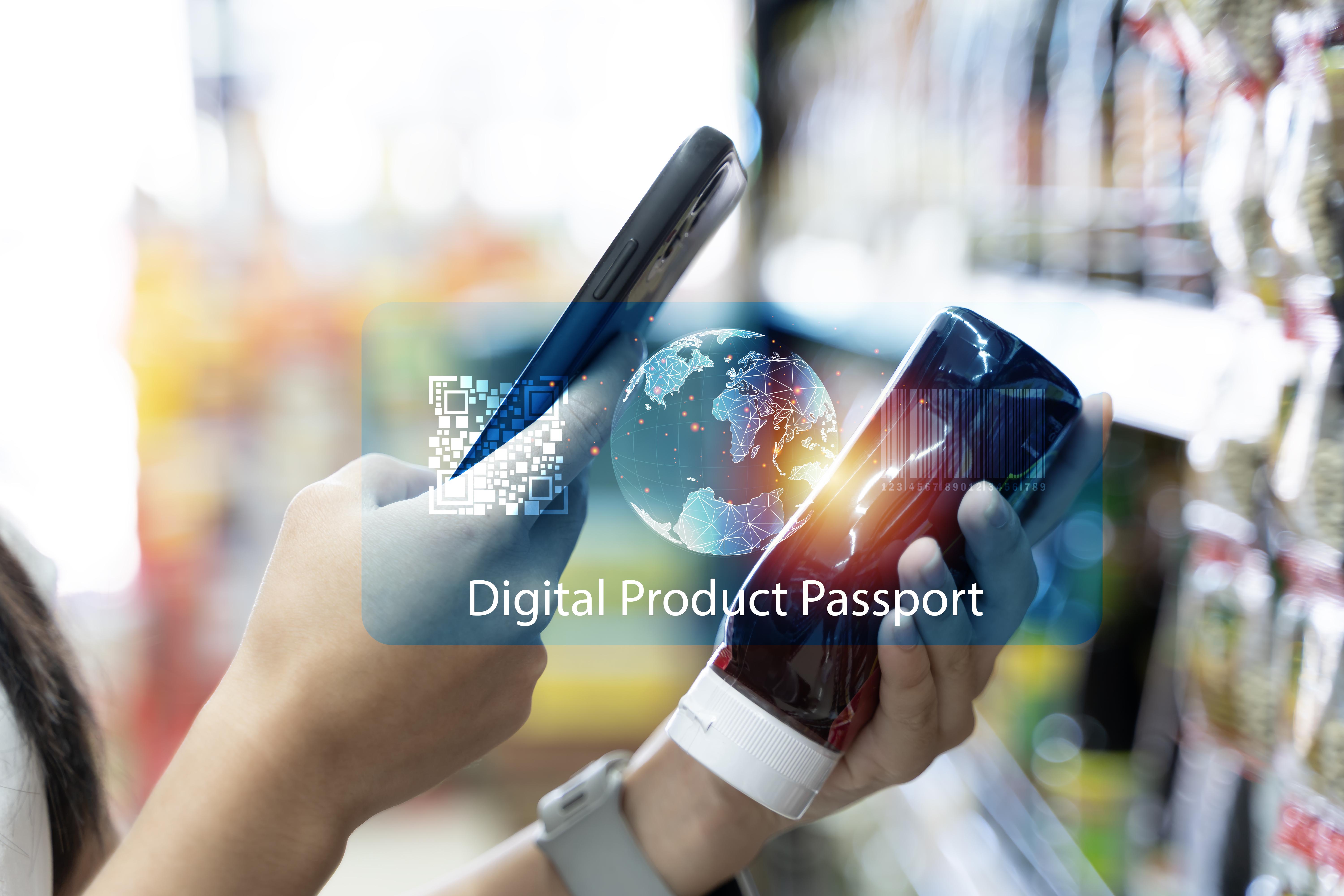
Why the Digital Product Passport (DPP) is radically changing the market
The DPP is not just a regulatory requirement.
It is a digital industrial revolution impacting:
- Global supply chains
- ERP and PLM systems
- Logistics and customs
- ESG strategies
- Post-sale business models
With the DPP, transparency is no longer optional—it is structural.
Regulatory Framework: ESPR and Battery Passport
1️⃣ ESPR Regulation – Regulation (EU) 2024/1781
The Regulation (EU) 2024/1781 formally introduces the Digital Product Passport as a mandatory tool for product categories that will be progressively defined through delegated acts.
Key principles:
- Interoperability
- Open standards
- No vendor lock-in
- Profiled access to data
- Unique identifiers
2️⃣ Battery Passport – Regulation (EU) 2023/1542
The Regulation (EU) 2023/1542 introduces the digital passport for industrial and electric vehicle batteries.
📅 Mandatory from 18 February 2027 for certain categories.
This is the first concrete, operational case of a mandatory DPP in Europe.
Timeline 2026–2030: What to expect
- 2025–2026 → Definition of delegated acts for priority sectors
- 2026–2027 → First mandatory categories (batteries, textiles, electronics)
- 2027–2030 → Progressive extension to other sectors
Companies need to start preparing now.
Sectors impacted by the Digital Product Passport (DPP)
🔋 Batteries and electric mobility
- Mandatory from 2027.
👗 Textiles, fashion, and luxury
- Part of the EU sustainable textiles strategy.
💻 Electronics and ICT
- High environmental impact and complex supply chains.
🏗️ Construction and materials
- Focus on durability and recyclability.
🛋️ Furniture and design
- Transparency on materials and manufacturing processes.
The real challenge: trust in the data
The regulation requires data to be accessible and interoperable, but it does not mandate a specific technology to ensure:
- Immutability
- Non-repudiation
- Certainty of data
- Integrity
Here lies the problem: a DPP based solely on traditional databases can be:
- Modified
- Manipulated
- Challenged
- Vulnerable to legal disputes
Regulatory compliance alone does not automatically guarantee evidential reliability.
Why Blockchain is the Trust Layer for the Digital Product Passport (DPP)
Blockchain enables:
- Recording cryptographic hashes of data
- Ensuring timestamp certainty
- Guaranteeing immutability
- Creating a verifiable audit trail
- Reducing the risk of post-factum alterations
In this context, blockchain does not replace enterprise systems—it makes them verifiable.
Ylium ID: The Blockchain Solution for the European DPP
Ylium ID was created to meet this exact need.
What Ylium ID does:
✔ Generates unique digital identifiers
✔ Records supply chain events
✔ Notarizes hashes on blockchain
✔ Provides a verifiable dashboard
✔ Integrates with ERP / PLM / MES systems
Operational Architecture of Ylium ID:
1️⃣ Product identified via QR/NFC
2️⃣ Event recorded in the enterprise system
3️⃣ Cryptographic hash generated
4️⃣ Hash anchored on blockchain
5️⃣ Dashboard accessible and verifiable
Result: every event becomes a digital proof.
DPP and Customs: A New Geopolitical Scenario
The DPP will also be used for:
- Import/export
- Verification of material origin
- Market inspections
- Environmental compliance
In a context of global trade tensions, the ability to prove data authenticity becomes a competitive advantage.
DPP and Circular Economy
The Digital Product Passport enables:
- Certified resale
- Tracked repair
- Digital ownership
- Buy-back programs
- Measurable ESG performance
Risks for Non-Compliance
❌ Fines and sanctions
❌ Customs blocks
❌ Exclusion from the EU market
❌ ESG reputation damage
❌ Loss of competitiveness
Competitive Advantages for Early Adopters
✔ Regulatory anticipation
✔ ESG leadership
✔ Customer and investor trust
✔ New business models
✔ Reduced legal risk
Why Ylium ID is Strategic Today
A DPP without proof of integrity is just a database.
With Ylium ID, it becomes:
- Verifiable
- Audit-ready
- Compliance-ready
- Scalable
FAQ – Digital Product Passport
What is the DPP?
Mandatory digital identity for products under Regulation (EU) 2024/1781.
When does it take effect?
Progressively from 2026 to 2030; batteries from 2027.
Is blockchain mandatory?
No, but it is the most effective technology to ensure integrity and verifiability.
How long does it take to implement Ylium ID?
A pilot can be operational in 20–60 days.
The DPP is a Structural Transformation
The Digital Product Passport is not a trend.
It is the new digital infrastructure of the European market.
Companies that act now can:
- Turn compliance into market leadership
- Reduce future risks
- Create value across the supply chain
Ylium ID is the blockchain trust layer that makes the Digital Product Passport truly reliable.